I was taking a break from reading to watch my favorite television show when I saw the following commercial. It made me think about online education and how we need to teach our students to verify their sources.
Showing posts with label links. Show all posts
Showing posts with label links. Show all posts
Monday, December 17, 2012

Sunday, December 02, 2012
The Changing Market Structure of Dreams

Higher Education competes in a Monopolistic Competitive market structure. A pure competitive market will sell a homogenous product and will only compete based on price alone and nothing else. In a monopolistic competitive market the item being sold is differentiated, based on location, perceived quality differences, and quality of customer (student) service. This is why firms in these types of Markets do not compete on price alone.
One of the characteristics that help economists to identify the various market structure is the existence of Barriers to Entry. In higher education the Barriers to Entry include class size, time, location, Accreditation and the reputation/qualification of the faculty. However, most of these barriers can be overcome by new competitors for example a new competitor can lure star faculty away from their current college. The Accreditation barrier can be overcome by meeting certain standards and jumping through the various bureaucratic hoops. The only barrier remaining was location, and instructional infrastructure (Libraries, classroom seats).
Now with the advent of online education new competitors have found they are not restricted by geography and they can invent ways to cram as many students into virtual classrooms. Thereby the explosion of Massive Open Online Courses more popularly known as MOOC.
Some of these new entrants ave gone into partnership with existing well known competitors such as Harvard, Stanford, and other well known Universities to overcome the reputation and faculty qualification barrier. They also have overcame the infrastructure and location barrier by providing virtual classrooms and Libraries.
I could see the removal of the listed barriers, but I could not figure out how they plan to generate revenues. Last night in my dream I found the source of that revenue. It is testing, examination, assessment! Here is a testing company that is generating revenues from this model and using the existing infrastructure to generate revenue from the dreams and ambitions of our students.
Sunday, August 05, 2012
Interesting Prezzi On Social Media and Medicine
This was an Interesting use of Prezzi instead of powerpoint.
You can set up a Prezi account for free if you use your Rio Hondo . EDU email address.
You can embed your presentations into your blackboard course.
You can set up a Prezi account for free if you use your Rio Hondo . EDU email address.
You can embed your presentations into your blackboard course.
Sunday, July 01, 2012
Our New President

".... Talking of money and budgets the budget person from CCA who was explaining how to read these budgets commented that Rio Hondo and Mendicino have the most honest budget in the State. Now this guy was a CTA union analyst invited to teach us how to read these forms and sometimes correctly sees a conspiracy behind every budget. The next time you see Teresa give her a hug for being one of the best budget persons in the State of California."I am looking forward to serving with such an honest and capable leader.
Sunday, June 17, 2012
Why Standardized, Industrial Model of Education Sucks?
Tuesday, June 12, 2012
4 Steps 2 Happiness
I subscribe to illustrations by Carl Richards on his website Behavior Gap. I found this latest illustration on point. In my Economics classes I try to explain the concept of unlimited wants vs limited resources. Most of my students do not accept this concept and confuse wants with needs. I am thinking of assigning the following questions as homework after the first lecture.
I will modify the questions removing the word financial. I encourage everyone to follow this link to view Mr. Richard's illustration.
- What if financial happiness is not about getting more but about wanting less?
- What if things start out as wants and become needs not because the thing itself has changed but because our feelings about it have changed?
- What if you can never really get enough of something that you don’t need?
Sunday, June 10, 2012
Improving Labor Relationships At Rio
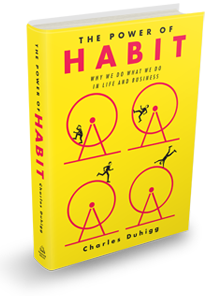
The section describing how Paul O'Neill improved the relationship between management and labor made me interested in this book. The author claims that Mr. O'Neill by emphasizing safety the culture of the company changed.
The important point is that Mr. O'Neill did not march in and order greater efficiency. He accomplished this task by studying and analyzing the habits of the workers before implementing changes to 'tweak' those habits.
Also toward the end of the interview he points out that "...bad managers pretend organizational habits do not exist so when habits emerge they become toxic!"
Could this be the reason for the recent rebellion of Faculty and Classified Staff at Rio Hondo?
Saturday, June 09, 2012
The Future of Online Education?
I was listening to Marketplace Money on NPR today and heard the following story.
The concept of a certificate in Critical Thinking caught my attention.
If the player does not work or you need the transcript click here.
The concept of a certificate in Critical Thinking caught my attention.
Employers are hungry for better ways to measure a job applicant's skills. At the same time, individuals are looking for cheaper ways to get an edge in the workforce.
Enter alternative credentials, which offer new ways to certify what people know.
...StraighterLine, a start-up in Baltimore that offers low-cost online courses. Students get credit at partner universities. And starting this fall, they'll be able bolster those credits with something new: A critical thinking score.
If the player does not work or you need the transcript click here.
Thursday, June 07, 2012
Some Articles of Interest
Here is an article from Inside Higher Ed describing how Adjunct Faculty are joining Unions.
What I found interesting in this article is that these faculty joined the United Steel Workers.
Here is another story on the Accreditation issue.
What I found interesting in this article is that these faculty joined the United Steel Workers.
Here is another story on the Accreditation issue.
Saturday, June 02, 2012
Cassandra
 Back in October 2011 after being called a "Cassandra" by some Administrators, I wrote about the pitfalls of using Higher One on this blog. Our esteemed Administration kept pushing, I wrote a follow up blog post in December 2011. That was followed by students in SHOUT complaining about it and it was posted on this blog. These students were dismissed as "Radicals"and "Uninformed".
Well here it is in the news again.
In case the link does not work here are some excerpts:
...the company hired by his college to pay out students' financial aid on debit cards.The following bit caught my attention back in September:
Four years after he opted out, his classmates still face more than a dozen fees , for replacement cards, for using the cards as all-purpose debit cards, for using an ATM other than the two on-campus kiosks owned by Higher One.
"They sold it as a faster, cheaper way for the college to get students their money," said Parker-Milligan, 23, student body president at Lane Community College in Eugene, Ore. "It may be cheaper for the college, but it's not cheaper for the students."
As many as 900 colleges are pushing students into using payment cards that carry hefty costs, sometimes even to get to their financial aid money, according to a report to be released Wednesday by a public interest group.
Among the fees charged to students who open Higher One accounts: $50 if an account is overdrawn for more than 45 days, $10 per month if the student stops using his account for six months, $29 to $38 for overdrawing an account with a recurring bill payment and 50 cents to use a PIN instead of a signature system at a retail store.The response I was given was similar to the following from the article:
Higher One has agreements with 520 campuses that enroll more than 4.3 million students, about one-fifth of the students enrolled in college nationwide, according to public filings and the U.S. PIRG report. Wells Fargo and US Bank combined have deals with schools that enroll 3.7 million, the report says.Please remember the faculty at Rio Hondo care for their students. If we come across as Cassandras it is because we care. We do not accept ideas because they are cheaper. We blindly do not accept procedures just because other colleges do it that way. We ask questions because we care.
Lane Community College's president, Mary Spilde, said in an interview that the real problem is a "lack of adequate public funding," which forces students to seek financial aid and colleges to find ways to cut costs.
"Many institutions are looking at ways to streamline and to do things that we're good at, which is education and learning, and not banking," Spilde said.
Programs like Higher One's shift the cost of handing out financial aid money from universities, which no longer have to print and mail checks, to fee-paying students, said Rich Williams, the report's lead author.
Sunday, October 23, 2011
College Level Math & English As A Gateway to Priority Registration

I have mixed feelings about this trend of using metrics. There is the Economist in me who understands that resources are limited and we can not waste these scarce resources. Then there is educator in me who interacts with the students and understands that life throws curve balls at our students stopping them dead in their educational track. I am going to approach this post as an economist with a simple change that will raise the graduation rates at Rio Hondo College. My suggestions will not be popular with some of my colleagues but are gentler than what will be forced upon us and our students in a few years. Read the article.
There are many programs at Rio Hondo that give priority registration to various subgroups of students. Many of these students due to their difficult circumstances or lack of maturity do not finish the class or do not graduate. They sign up for classes denying spaces to students who would most likely finish and most likely to graduate from Rio Hondo .Due to the segregated nature of the K-12 system in California with higher performing schools in higher income areas most of our students at Rio Hondo come to college unprepared. These unprepared students lower both success and graduation rate at the college. If the college is interested in increasing success and graduation rates, it should assess every student and give priority registration to all students who are performing at college level.
As it stands now many of our degrees require College Algebra and English 101 as a graduation requirement. Students delay taking these classes thereby lowering their chances of success in other classes.
I proposed giving students who take these classes at the beginning of their college career the incentive of priority registration. As the number of classes offered shrinks the incentive to register for college level math and English will increase. The only determination of whether one qualifies for priority registration should be if the said student can perform at the college level or not.
Wednesday, February 16, 2011
Chinese College Graduates

Saturday, September 25, 2010
A Great Site for History Instructors
Here is a great site for History instructors. I may use it for my Econ class when talking of Unemployment.
Monday, April 19, 2010
Global Education
Follow this link to read an excellent article from Inside Higer Ed. The article discusses why community colleges need to internationalize their curriculum. As an Economist the following comment jumped out at me.
“The employability impact of what can happen to you if you don't have
international experience is real,” said Harder, adding that students who do not
have global exposure are considerably less valuable to an employer than students
with such experience. “Community colleges cannot afford for their students not
to compete in a global labor market.”
Wednesday, March 17, 2010
Monday, November 09, 2009
Surveys
Recently, we had the Rio Hondo Climate Survey published and I questioned its validity. I felt the questions were confusing, and the survey was too long. Also I noticed the measurement tool was becoming the goal. There was too much emphasis on the number of respondents, and the powers to be ignored the chances that answers may or may not be accurate.
Well here is an article that questions the validity of a well known survey.
Well here is an article that questions the validity of a well known survey.
Wednesday, September 23, 2009
College for $99/month
Everyone should listen to this show from NPR. It is an interview with Kevin Carey, policy director for the Education Center, and Marc Parry, reporter for the Chronicle of Higher Education. Here is the transcripts of the show.
Wednesday, September 16, 2009
Are We Going the Way of Newspapers
Here is an interesting piece from the Washington Post titled A Virtual Revolution is Brewing for Colleges.
The following section caught my eyes:
The article points out that with the invention of online education the barriers to informations have broken down.
They also point out that not all students come to college for the sake of learning, and some view education as a comodity with a price tag.
The following section caught my eyes:
"Colleges, like newspapers, will be torn apart by new ways of sharing
information enabled by the Internet. The business model that sustained private
U.S. colleges cannot survive. "
The article points out that with the invention of online education the barriers to informations have broken down.
"Both newspapers and universities have traditionally relied on selling
hard-to-come-by information. Newspapers touted advertising space next to
breaking news, but now that advertisers find their customers on Craigslist and
Cars.com, the main source of reporters' pay is vanishing. Colleges also sell
information, with a slightly different promise -- a degree, a better job and
access to brilliant minds. As with newspapers, some of these features are now
available elsewhere. A student can already access videotaped lectures, full
courses and openly available syllabuses online. And in five or 10 years, the
curious 18- (or 54-) year-old will be able to find dozens of quality online
classes, complete with take-it-yourself tests, a bulletin board populated by
other "students," and links to free academic literature. "
They also point out that not all students come to college for the sake of learning, and some view education as a comodity with a price tag.
But the demand for college isn't just about the yearning to learn --
it's also about the hope of getting a degree. Online qualifications cost a
college less to provide. Schools don't need to rent the space, and the glut of
doctoral students means they can pay instructors a fraction of the salary for a
tenured professor, and assume that they will rely on shared syllabuses. Those
savings translate into cheaper tuition, and even before the recession, there was
substantial evidence of unmet demand for cheaper college degrees. Online degrees
are already relatively inexpensive. And the price will only dive in coming
decades, as more universities compete.
Tuesday, March 31, 2009
Transfer From 4 year to 2 year
Here is an interesting story from the show Marketplace. Many students are transferring from the four year schools to the community colleges.
Saturday, March 07, 2009
A Great Site for Writing Assignment
I am at a conference and I learned about a great site from a professor from Cal Poly Pomona. The site, calibrated peer review, lets students grade one another papers. The unique feature of this site is that it first makes students to grade a sample work based on the rubric provided by you to see if they have the ability to grade other students work. The site is free and is provided by UCLA. We should create an account for our division.
Subscribe to:
Posts (Atom)