Showing posts with label Books. Show all posts

Tuesday, January 22, 2013

Audio Vs. Print

I have been listening to audio books from Audible on my iPod. Mostly I listen to novels by authors such as Kurt Vonnegut, Haruki Murakami, Neil Gaiman, and other quirky writers. Also I listen to books on historical figures. However recently I tried to listen  Antifragile Things that gain from disorder by my favorite author Nassim Taleb.   I realized that unlike fictional novels, I can not follow nonfiction books in an audio format. 
Although it was fun to listen to his arguments, it was hard to follow it. I found myself constantly going back and reviewing what was said.
This made me understand why some students can remember and rewrite my crazy stories on the essay portion of their exams, but can not completely answer the question.  I believe they are relying on my lecture and are not reading the textbook.
As they listen to my lectures they remember the stories I tell to make the lecture more interesting but miss the more technical aspect??
Talking of stories I am working on using a story from the book Rant by Chuck Palanhiuk, to illustrate how resources can be misallocated. In this story Rant finds gold coins and gives them to his classmates. As the number of children with gold coins (with purchasing power) increases, the store owners expand the number of aisles dedicated to toys reducing the number of aisles for other  necessities. Also prices start going up which is another econ concept. Can you name it?

Sunday, June 10, 2012

Improving Labor Relationships At Rio

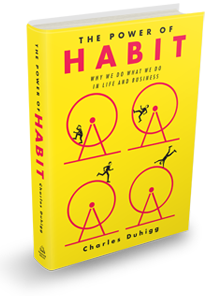
Today at the dog park, I was listening to Harvard Business Review and heard the following interview with  Charles Duhigg, reporter for The New York Times and author of The Power of Habit: Why We Do What We Do in Life and Business.

The section describing how Paul O'Neill improved the relationship between management and labor made me interested in this book. The author claims that Mr. O'Neill by emphasizing safety the culture of the company changed.
The important point is that Mr. O'Neill did not march in and order greater efficiency. He accomplished  this task by studying and analyzing the habits of the workers before implementing changes to 'tweak' those habits.
Also toward the end of the interview he points out that "...bad managers pretend organizational habits do not exist so when habits emerge they become toxic!" 
Could this be the reason for the recent rebellion of Faculty and Classified Staff at Rio Hondo?

Monday, December 12, 2011

Fall of Faculty

This was an excellent interview with the author of The Fall of Faculty The Rise of the All-Administrative University and Why It Matters. Here are some excerpts from the interview: 

Q: In your book, you refer frequently to "deanlets and deanlings." Can you please tell me a little more about what you mean?A: I wanted to emphasize a major shift that’s been underway for several decades. Deans have an academic background. Years ago, they were part-time and always part of the faculty. This is extremely important because, like the faculty, they saw the university as an instrument of teaching and scholarship. Today, we have a cadre of professional administrators. I called them deanlets to give emphasis to the difference. They either have no faculty background or they decided early in their careers that their talents lay elsewhere. To them, what used to be the means is now the end. Instead of an institution serving teaching and scholarship, teaching and scholarship serve the institution.

Q: You describe administration as, like many bureaucracies, a kind of self-perpetuating entity that seeks to expand as a way of justifying its own existence. What are the most egregious examples?A: In the book, I provide a number of examples. I tell the story from my own experience of our summer program, which had one administrator and 400 students. It was given over to a professional deanlet. It soon had 400 professional staff members and one student. And no one seemed to care.
Q: What impact do you hope this book will have?A: I hope to wake up the faculty. We’re like the residents of a Japanese city living next to the ocean and thinking the tsunami won’t affect us. I also hope to alert university boards. When they read the administration's propaganda organs, I want them to understand that the institution they love needs their help. They didn’t come to Hopkins or Georgetown or Princeton to work with our deanlets. They came to work with our faculty.

Read more: http://www.insidehighered.com/news/2011/07/14/new_book_argues_bloated_administration_is_what_ails_higher_education#ixzz1gOCeZmUO Inside Higher Ed 

Sunday, August 21, 2011

Vision Statement

This is follow up to the blog post Key Questions For Leaders posted on August 12.
I bought this leadership book and am reading it. I am surprised to say that there are many good ideas in there that could be applied at Rio Hondo.
The author stresses the importance of having a clear vision for an organization created by the stakeholders. The author is against boiler plate vision statements written by consultants. He recommends getting the stakeholders together every few years and asking them the following questions:
  • Why do you work at this organization? You could work elsewhere: why do you work here? What do you love about this organization?
  • What would you like to tell your grandchildren about why you worked at this place for thirty years of your life? ... To what great cause/accomplishment has this organization contributed?
  • What would you like this organization to look like in ten years? What would you hope to say that it accomplished?
  • What are the distinctive competencies of this organization? What would the world lose, or forgo, if it didn't exist?
By being involved in the creation of  the vision statement, they will take ownership of the vision statement and will work hard toward accomplishing the tasks necessary to realize this vision.
Our current vision statements were written and edited by a small group consisting of 3 to 6 dedicated people. We should start with a Blank Sheet of paper with Trustees, Administration, Classified, Faculty, and students all together in one room to come up with a common vision.  

Thursday, February 04, 2010

Check List on the Daily Show

I have already posted on this book, and have purchased it on Amazon. Here is the video of the intervview on the Daily Show.
The Daily Show With Jon StewartMon - Thurs 11p / 10c
Atul Gawande
www.thedailyshow.com
Daily Show
Full Episodes
Political HumorHealth Care Crisis

Wednesday, February 03, 2010

Checklist Manifesto

I was listening to the Harvard Business Review on i-Tunes U and heard an interview with Dr. Atul Gawande M.D. In his latest book The Checklist Manifesto , he argues due to problem of extreme complexity in most processes the use of checklists can reduce complications due to break down in communication.
I was intrigued by his argument and have ordered his book from Amazon. I wonder if his recommendation of creating checklists can benefit our college.
I imagine a checklist for Faculty, Classified and Administrators to use when changing curriculum or any other standard operations.
The question will be who is going to create the checklist?

Friday, October 16, 2009

My favorite Economist and a Librarian in 1909


I am reading the biography of my favorite economist Joseph Schumpeter by Thomas k. McCraw. Schumpeter is famous for coining the term "Creative Destruction" ; pointing out the importance of innovation in economics; pointing out how capitalism relies on banker creating money out of nothing, and popularizing the role of the Entrepreneurs in economics.

But this post is not about Economics but about a duel between Schumpeter and a Librarian.
Schumpeter's students complained to him that the librarian forbade them to check out books he had assigned them. After hearing this he goes to the Library and insulted the librarian.
The librarian having his personal character questioned challenges Schumpeter to a duel.

"Neither had great skill with swordmanship. But after much clumsy clashing
of metal... the blade of one hacked a small slice in the shoulder of the
other. The appearance of blood brought ...an end to the duel."

The Librarian lost the duel but was able to leave the field having defended his honor, and the students were able to check out the assigned books.
This happened in 1909. That was 100 years ago. I think we should recreate this event at Rio Hondo.


Wednesday, August 19, 2009

Create Your Own Economy

Here is an interview with the Economist Tyler Cowen. I always suspected that better economists are autistic.

Tuesday, December 30, 2008

My Reading Binge


I have been on a binge lately. I am finally reading all of those books that I bought from Amazon. Most of the books have been a disappointment but there were a couple that were excellent. One was Ascent of Money by Niall Ferguson and another is Black Swan by Nassim Taleb.

As I read these two books, I could not stop thinking about our history teachers. Niall Ferguson looks back in history through an economic lens which was interesting to me. In this book he traces the history of money and all of the previous financial booms and busts.

I am a big fan of Nassim Taleb since reading his other book Fooled by Randomness which made me question everything I learned in graduate school. Taleb is not a fan of Historians and I do not recommend this book to the Historians among us. However, if you wish to have a good laugh at the expense of Economist (Yes he does not like Economist either) and Historians read this book and snicker as the economist and the historians walk by you.

Wednesday, November 05, 2008

Free Textbooks


Here is a company "Flatworld" that gives away the electronic version of their textbook away for free. They charge $25 for a printed and bound version of the book mailed to the student. They will let you cusomize the textbook. They will let you (I quote) "Change the order of chapters or sections - or delete them altogether. You can add large chunks of information like a case study or an exercise set." "...and actually make changes at the sentence level."

Here is another site with lots of good links to cut textbook prices.

Saturday, August 30, 2008

Editing books

During this labor day weekend I am reading two books that I bought from Amazon (microtrends and Yes!) I have noticed a pattern in both of these books. The chapters are short! I do not know if the author wrote the chapters in a short format or the editors edited them down into short chapters. Could this be the consequence of our short attention span? Did the Authors of these books chose to write short chapters due to their lack of attention spans? Or was it the book editors who chopped them up into small chapters? OK. Back to reading my books. Oh yes I am multitasking and reading two books! As I get bored with one I pick up the other! Oh NO me too!

Thursday, November 01, 2007

Harvard University Press Course Book Program

The following is copied and pasted from an email I received from Harvard University Press.
They are offering desk copies for college professors via the internet. They ask for the shipping and handling of $6 .

HARVARD UNIVERSITY PRESS COURSE BOOK PROGRAM
Dear Scholar,
If you are a college professor, Harvard University Press invites you to review our course books online. The Course Book Program enables faculty to easily evaluate Harvard's paperback titles for course use. After registering, the latest scholarship in your field is available at your fingertips—and at no charge. You are welcome to return to the site at any time for further examination.
A selection of 2007 titles, as well as some backlist favorites, are accessible for viewing via our Course Book Program web page. For ease of browsing, course books are categorized by discipline including American History; Business Education; Literature; Music, Arts, Philosophy; Politics Psychology; Sociology; Science; and World History.
There is also an option to order an examination copy of a select group of paperback titles that are not available to view online. A $6 charge for each title will cover shipping and handling; a maximum of three titles may be requested.
Simply visit www.hup.harvard.edu/educators/ to review the latest scholarship in your field.
Sincerely,Jennifer HarringtonHarvard University Press

Saturday, October 27, 2007

Value of a Textbook & Crying in My Beer


I was thinking about the cost of textbooks again and how it hurts our students. I use a program called Aplia for my online and hybrid classes. Aplia provides an e-text for $60, along with access to the workspace site. The students can buy a physical textbook with an access card but that increases the cost to $78 for Micro and $117 for the Macro class. I recommend that they use the e-text and print out the chapters they need. The EOPs students buy the physical textbook because their vouchers are valid only the bookstore.

Aplia lets me see lots of interesting things. I can see what percentage attempted the homework, what percentage failed a particular question. Also I can see what percentage opened up the reading assignment. The average access rate over all assigned readings in my online classes is 48%. In plain English I can see that less than half of the class has opened up the reading. They need the reading; the average grade for both classes is about 64%.

I have always suspected that students weren't reading assigned material, but now I can actually see that they are NOT!

I was talking about this with another economist (who has been teaching for over 20 years at another community college, and he said the following:
(the following is paraphrasing what he actually said)
"The reading statistics should not surprise you! Student complaints about textbook prices has more to do with the the fact that many students do not use them. Many students buy the book knowing probably they won't read them. They resent the high prices because they see a textbook purchase only as some kind of insurance! Most use it like a reference book...Few use it as prop... All of them complain about the price because they do not use it as much as we would like them to.. Come on Mike this is basic microeconomics! Price should reflect the value the buyer assigns a good. They complain when the two are out of whack!"
As I was about to cry into my beer he said "don't get depressed. There are students who are actually reading the text, and learning. Look for those students and you will enjoy teaching more.."

Thursday, October 25, 2007

Textbook Prices Comparing Bookstore Prices to Online Prices

It is Thursday, and I got lots of time to kill before my evening class starts. So I took a little trip to the bookstore and decided to pick some books at random. I wrote down their prices and the ISBN number. Next I went up to my office and searched for them in Amazon dot com. I compared the prices and found the following results:

Mastering the World of Psychology (2nd Edition) (MyPsychLab Series)

  • Amazon price $80.56
  • Bookstore price $89.17

Psychology (Hardcover)by David G. Myers

  • Amazon $92.71
  • List Price $107.95
  • Bookstore price $117.83

Sociology: A Down-to-Earth Approach (MySocLab Series) (Hardcover)by James M. Henslin

  • Amazon $88.46
  • List Price $117.33
  • Bookstore $117.83

Introduction to Physical Anthropology (Paperback)by Robert Jurmain , Lynn Kilgore , Wenda Trevathan , Russell L. Ciochon

  • Both Amazon & List price $107.95
  • Bookstore price $100.05

The mark up for Psychology is $10 over the list price. The markup for Sociology is $0.50 over th list price. The Anthropology book I can not figure out.

Tuesday, December 19, 2006

Community College Equity

This is an interesting link to visit. It discusses the challenges faced by the community colleges.